Key Takeaways:
- This year brought important developments in trademark cases, as courts from the Supreme Court on down addressed the availability of disgorgement damages, when common words or phrases can function as trademarks and cutting-edge questions around AI.
- Cases from prior years, including the Supreme Court’s landmark decision in the “Bad Spaniels” parody case, continue to shape contemporary fights in the lower courts over fair use and the First Amendment.
- Looking ahead, the increasing use of AI by brand owners is likely to draw increasing scrutiny in the months ahead, as courts and legislators alike scrutinize AI-generated outputs for trademark and false advertising issues. Issues like failure to function and the scope of equitable remedies will also continue to be hot-button topics in the year to come.
A look back at 2025 in trademark litigation reveals several key developments. High-profile brands clashed over foundational issues like likelihood of confusion, fair use, and First Amendment rights, offering important lessons for brand owners. Lower courts began to work through recent Supreme Court rulings, as the well-known “Bad Spaniels” case returned to the District of Arizona, and courts grappled with when a U.S. trademark owner can sue for foreign infringement. The Supreme Court also weighed in on the hot-button issue of disgorgement damages, defining the scope of profit awards under the Lanham Act in its Dewberry decision but leaving lower courts with little guidance about when disgorgement is an appropriate remedy.
Some of the hardest-fought battles were over when trademark law even applies, as defendants raised failure-to-function defenses, and the Federal Circuit called on the TTAB to bring more rigor to its decisions in this area.
Litigation involving generative AI also continued to accelerate in 2025. While AI copyright issues have dominated headlines, critical trademark questions are also at play, and we expect these disputes to intensify in 2026 and beyond.
Challenges to Registration and Enforceability: Failure to Function and Genericness
Several of this year’s cases were fought over attempts to protect generic, highly descriptive, or widely used words. The Federal Circuit set forth new standards and paved the way for more clarity, establishing for the first time that courts must look to the time of registration to determine whether a term is generic; clarifying when consumers lack the necessary commercial interest to oppose a registration; and requiring the TTAB to use reasoned, administrable standards in assessing failure to function.
The F-Word Takes Another Trip on Appeal: In re Brunetti
A long-running case over the f-word continued to make waves. The Federal Circuit put the U.S. Patent and Trademark Office’s (“PTO”) “failure to function” test under the microscope, this time in connection with an attempt to register the f-word standing alone as a mark. In re Brunetti, 151 F.4th 1367, 1372 (Fed. Cir. 2025).
After the Supreme Court ruled in 2019 that the PTO could not refuse to register a similar mark simply because it was “scandalous,” the PTO tried again. This time, it argued the mark failed to function as a source identifier because the f-word is a “[w]idely-used [c]ommonplace” term. Id. The Trademark Trial and Appeal Board (TTAB) agreed, calling it an “all-purpose” word used so broadly by so many that it could not signal a single commercial source. Id.
The Federal Circuit sent the case back, faulting the TTAB for not providing a clear, workable standard for when a ubiquitous word can function as a trademark. Id. at 1379. Pointing out that the PTO already had registered the very same word for other products (like snow globes and gummy candies), the court instructed the PTO to develop a more consistent and reasoned approach. Id. at 1377–79.
Trademark applicants will likely get greater clarity about the standards the TTAB will use to evaluate their applications and evidence, now that the TTAB’s prior approach to failure to function was held to be inconsistent with the “reasoned decisionmaking” the Federal Circuit requires. Id. at 1379. While failure to function remains a hurdle for common expressions, the TTAB will need to do more than point to the ubiquity of such expressions and must articulate clear, administrable standards for when such words can indicate source. Brand owners looking to build around a common word should watch this case closely on remand, as it should provide critical guidance on when an everyday word can become a protectable asset.
Whisky Business for Generic Marks: Bullshine Distillery LLC v. Sazerac Brands, LLC
Brands have long feared “genericide”—when a brand name (like ESCALATOR) becomes so widely associated with a product it loses its source-identifying function. But what if a term that was once generic starts to be associated with a single source? In a case of first impression, the Federal Circuit clarified that a mark’s genericness is at the time of registration—regardless of whether it might have been generic in the past. Bullshine Distillery LLC v. Sazerac Brands, LLC, 130 F.4th 1025 (Fed. Cir. 2025).
The dispute began when Bullshine Distillery sought to register BULLSHINE FIREBULL for alcoholic beverages. Sazerac, owner of the popular FIREBALL mark for whisky, opposed the application. Bullshine fired back, arguing Sazerac’s mark should be cancelled because “fireball” was a generic term before Sazerac tried to register it. The TTAB disagreed with both parties, finding no likelihood of confusion and that FIREBALL was not generic. Id. at 1027–28.
On appeal, the Federal Circuit sided with Sazerac, affirming that the key moment for the genericness test is when the mark is registered. Id. at 1031. The court rejected Bullshine’s theory that a term that was generic in the past could never again be registrable as a trademark. The court reasoned that since the goal of the Lanham Act is to prevent consumer deception about a product’s origin, what matters is how consumers perceive the term at the time of registration, not “what consumers thought of a term ten, fifty, or one-hundred years ago.” Id. at 1029–30. The fact that marks can be cancelled if they later become generic, the court noted, shows that a term’s status can evolve over time as consumers’ perceptions change. Id. at 1029.
Much Ado About Oatmeal: In re Mush Foods, Inc.
In a decision issued just weeks after Bullshine, the TTAB took a broader approach to timing in a genericness inquiry in In re Mush Foods, Inc., No. 97,315,576 (T.T.A.B. Mar. 28, 2025).
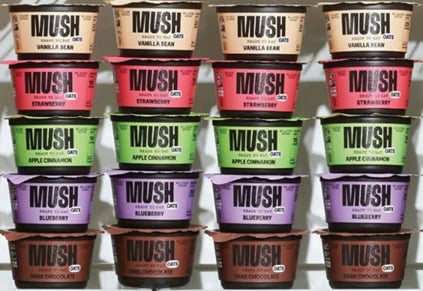
The TTAB affirmed a refusal to register MUSH for “ready-to-eat cereals; breakfast cereals; all the foregoing made in whole or significant part of oats,” finding the term MUSH was generic for those goods. Id. at 3, 11–12. The Examining Attorney submitted evidence including dictionary definitions of “mush,” “oatmeal mush,” and “porridge” as well as Internet recipes and YouTube videos, all of which supported the conclusion that “mush” or “oatmeal mush” included “food made by boiling oatmeal or other cereal grains.” Id. at 10–11. The Board found that this meaning encompassed the applicant’s goods such that “mush” was generic and not registrable. Id.
The applicant pushed back, noting some of the recipe evidence submitted by the examiner was from a website entitled “Vintage Recipes and Cookery” covering information from the 1800s. Id. at 8, 10. The Board did not bite, noting that the website offers both “historical background for the food item called ‘mush’” and information on the “ease of preparation and nutritional value . . . for the general public today.” Id. at 10–11. The TTAB conceded that “mush” “may be a less common term today than it once was” and is “frequently [] associated with porridge now,” but held that the term “remains in use” for the relevant food item. Id. at 11. The Board also explained that evidence of “generic uses of ‘mush’ by competitors,” which the Examining Attorney failed to present, was not required given the other evidence that consumers understood the term generically. Id. at 8–9.
The TTAB’s decision set a high bar for demonstrating that a term that was once generic no longer is so, particularly given Bullshine’s holding—which was noticeably not cited in the Mush Foods opinion. Time will tell whether this opinion survives further review and how the Federal Circuit’s decision will affect the TTAB’s approach going forward.
UGG’s Trade Dress Claims Get the Boot in Deckers Outdoor Corp. v. Last Brand, Inc.
Dupes have been making a fast leap from the For You page to lawsuits. The UGG brand accused Quince of mimicking three of its unregistered trade dresses in lower-priced designs in a case that reached summary judgment briefing this year. Quince argued that two of UGG’s designs were so common in the industry that they were generic and unprotectable, and the court agreed.
Deckers Outdoor Corporation v. Last Brand, Inc., No. 23-CV-04850-AMO, Order re Motions for Summary Judgment, ECF No. 203, 2025 WL 2822685, at *1, 2, 4 (N.D. Cal. Oct. 2, 2025).
This case highlighted the importance of having an effective policing strategy to protect trademarks—including trade dress. Quince was able to identify “at least 14 competitors in the market” with “ankle-high sheepskin boot[s]” similar to the “Mini” UGG model, as well as “at least 9 competitors that sell moccasin and clog slippers similar to the Tasman.” Id. at *4. UGG failed to provide sufficient contrary evidence to establish nongenericness, despite having the burden to do so. Id. at *4–5. The case also highlights a key risk of litigation against dupes: attempts by defendants to invalidate the plaintiff’s valuable intellectual property.
Along with the Bullshine and Mush Foods cases, these disputes make clear that courts will closely scrutinize the evidence in genericness cases, and extensive product similarity in the market may demonstrate that a product design does not function as a source identifier.
The Dangers of Getting Too Comfy with Generic Terms: Top Brand LLC v. Cozy Comfort Co.
Rival sellers of oversized “wearable blankets” clashed after Cozy Comfort (owner of THE COMFY) won a jury verdict on claims including that Top Brand’s uses of COMFY infringed Cozy Comfort’s THE COMFY trademark for blankets. On appeal, the Federal Circuit reversed, concluding “no reasonable jury could have found that Cozy Comfort met its burden to prove trademark infringement.” Top Brand LLC v. Cozy Comfort Co. LLC, 143 F.4th 1349, 1367 (Fed. Cir. 2025).
The Federal Circuit paid special attention to the weakness of Cozy Comfort’s mark. The court relied on the Supreme Court’s holding in Booking.com to hold that “generic or highly descriptive components” in a mark make consumers “less likely to think that other uses of the common element emanate from the mark’s owner.” Id. at 1365 (quoting United States Pat. & Trademark Off. v. Booking.com B.V., 591 U.S. 549, 562 (2020)). Because “comfy” was merely descriptive of blankets, the marks for “THE COMFY” merited only weak protection.
In terms of similarity of the protected and allegedly infringing marks, the court noted that Cozy Comfort failed to present “any evidence showing that Top Brand used Cozy Comfort’s full mark ‘THE COMFY.’” Id. at 1365. A single, descriptive instance of the word “Comfy” in a website’s drop-down menu was insufficient to support a jury finding that “Top Brand used a similar mark as a source identifier.” Id. at 1365–66. Minimal evidence of actual confusion—a few confused comments on an Amazon listing, not tied to Top Brand’s language—did not sway the court. Id. at 1366–67.
Once again, a lack of evidence proved decisive. Brand owners should take care to ensure they are using their registered trademarks as trademarks—and can prove that in court if necessary.
A Tough Climb for Consumer Standing in Curtin v. United Trademark Holdings, Inc.
When a company sought to register RAPUNZEL as a trademark for dolls, it was not a competitor who objected but a doll collector and parent. She argued that the name was too generic to be a trademark. This raised a key question: can a regular consumer—rather than a business competitor—challenge a trademark registration on commercial grounds like genericness?
The Federal Circuit’s answer was no. Curtin v. United Trademark Holdings, Inc., 137 F.4th 1359 (Fed. Cir. 2025). To have standing under the Lanham Act to challenge a registration, a party must have a statutorily cognizable interest at stake that is harmed by the registration, and the Federal Circuit reasoned that only other commercial actors would be harmed by registration of a generic or descriptive term. Id. at 1370.
Notably, the Federal Circuit didn’t impose a blanket ban on consumers challenging trademarks, reasoning that the right to bring a challenge should depend on the specific basis of the objection and whether the challenger falls within the “zone of interests” the Lanham Act aims to protect. Id. at 1369. That may not be the last word on this issue, however, as a petition for certiorari is pending before the Supreme Court.
Evidence Rules the Day in the Likelihood of Confusion Analysis
This year’s decisions were a reminder of the importance of developing persuasive evidence of marketplace context to prevail in the likelihood of confusion analysis. Trademark cases are all about consumer perception, and establishing how consumers see brands in the marketplace requires careful development of the evidentiary record.
Battle of the Blues: Casa Tradición, S.A. de C.V. v. Casa Azul Spirits, LLC
Luxury tequila brand CLASE AZUL took a second shot at its infringement claim when it appealed a district court’s refusal to permanently enjoin CASA AZUL canned tequila sodas and bottled tequilas. Casa Tradición, S.A. de C.V. v. Casa Azul Spirits, LLC, 2024 WL 1622638 (S.D. Tex. Apr. 15, 2024) (appeal pending, 5th Cir., No. 24-20255).
After a bench trial, Casa Azul (represented by our team) prevailed by proving that consumers would not be confused between the two brands, despite their superficial similarity. Casa Azul put forward evidence showing that “CASA” and “AZUL” are widely used terms in the tequila market, diminishing the mark’s strength, and showed that the “plaintiff’s marketplace recognition primarily hinges on its distinctive, hand painted blue-and-white bottles” rather than the “CLASE AZUL” mark. Id. at *14. The district court weighed this marketplace context heavily, noting that different products and price points (premium, made-to-display bottles versus lower‑priced, organic tequilas and canned beverages), distinct packaging and sales channels, and divergent marketing all reduced likelihood of confusion—in the end, six confusion factors favored Casa Azul. Id. at *15–19.
The district court also credited Casa Azul’s Eveready surveys showing just 0.33% confusion for cans and 1.70% for bottled tequila—“far below the 10% threshold” courts often use—while giving little or no weight to plaintiff’s modified Squirt survey for failing to reflect the fact that the products do not “appear proximately in the marketplace” and using leading controls. Id. at *10–11, 18. The court noted that plaintiff had not monitored point‑of‑sale contexts to find any actual examples of swayed purchases. Id. at *9, 17–18. Clase Azul could point only to a misdirected job inquiry, “mis-tags” on social media and instances of individuals asking the plaintiff whether it was “aware of the defendant’s products and . . . concerned about the potential for confusion.” Id. at *17. But none of these examples involved confused consumers. Id.
This case is pending on appeal, with a decision expected in 2026 after oral argument in early 2025, but Clase Azul’s experience shows how sustaining a trademark claim requires more than just a side-by-side comparison and alleged similarity: developing evidence of market context, and how consumers will perceive the brands, can make or break a case.
A Tale of Two Cities (and Their Airports): City and County of San Francisco v. City of Oakland
The Port of Oakland was enjoined from using the name “San Francisco Bay Oakland International Airport” following a trademark infringement case brought by San Francisco that demonstrates how implied affiliation or sponsorship claims can save plaintiffs even where ordinary confusion claims lack sufficient evidence. City & Cnty. of San Francisco v. City of Oakland, 2024 WL 4775737 (N.D. Cal. Nov. 12, 2024).
San Francisco holds an incontestable trademark registration for “San Francisco International Airport.” Oakland was trying to use all four of those words as part of its rebranded airport, and the court quickly concluded that San Francisco’s mark was strong and the parties’ services were identical. After concluding that there was a “low degree of customer care” exercised by consumers in determining an airport’s owner, the court held that putting “San Francisco” into Oakland’s airport name “is highly likely to imply affiliation, connection or association.” Id. at *10. Based on the implied affiliation theory, the likelihood of irreparable harm, and the public interest in avoiding customer confusion, the court granted a preliminary injunction against the Port of Oakland. Id. at *16–18.
Notably, although San Francisco prevailed on its affiliation claim, it had less success in establishing initial‑interest and point‑of‑sale confusion, with the court finding relatively weak evidence of actual confusion in the context of the millions of passengers flying in or out of SFO and pointing to the use of clear labels and descriptions on online search and booking results as tending to lessen confusion. Id. at *8–14. San Francisco’s survey was given no weight due to design flaws, with the court observing part of the survey results were “incomprehensible.” Id. at *15–16.
After the injunction, Oakland renamed the airport to “Oakland San Francisco Bay Airport,” which San Francisco also has alleged is infringing and is seeking to amend its complaint to encompass that rebrand as well. City & Cnty. of San Francisco v. City of Oakland, No. 24 CV 02311 (TSH), Motion for Leave to File Second Amended Complaint, ECF No. 120 (N.D. Cal. Nov. 12, 2025).
In the meantime, Oakland has appealed the injunction, and the parties argued the case before the Ninth Circuit in November. City & Cnty. of San Francisco v. City of Oakland, et al., 24-7532 (9th Cir. Nov. 17, 2025). During argument, at least two of the panel judges appeared to diverge as to whether the name caused confusion. No decision has been issued yet, but this fight will likely continue into 2026.
An Internet-Sized Hole in Dawn Donut: Westmont Living, Inc. v. Retirement Unlimited, Inc.
It’s often said that the Internet has made the world feel smaller, and that view led to an important decision about how to evaluate potential confusion between geographically distant competitors whose brands can nevertheless be found side-by-side online. The Fourth Circuit held that courts must look beyond mere geographic distance when determining likelihood of confusion, narrowing the applicability of the Second Circuit’s canonical (but decades-old) decision in Dawn Donut Co. v. Hart’s Food Stores, Inc., 267 F.2d 358 (2d Cir. 1959). Westmont Living, Inc. v. Retirement Unlimited, Inc., 132 F. 4th 288, 291 (4th Cir. 2025). In evaluating potential confusion between two retirement facilities located on opposite coasts that both use the name “Westmont,” the Fourth Circuit clarified that “Dawn Donut stands for a narrow and logical principle that where businesses use the same mark in physically distinct geographical markets and their marketing and advertising are confined to those geographical markets, a likelihood of confusion will not be created.” Id. at 297 (emphasis added). Because the district court failed to consider the other relevant confusion factors, including the parties’ national advertising, the Fourth Circuit vacated and remanded for a more fulsome analysis. Id. at 298–99.
Trademark Claims on the AI Frontier
Generative AI cases present both novel and traditional trademark infringement claims. Publishers of major media publications such as The Wall Street Journal and New York Times have brought suits against AI developers alleging trademark infringement, false designation of origin, and dilution. These brand owners have asserted that AI outputs mislead consumers when they reproduce trademarks, particularly when they do so alongside content AI has made up (commonly called “hallucinations”).
Plaintiffs’ early victories against procedural challenges indicate that these trademark claims have staying power and serve as a warning to AI developers—and users of generative AI—to carefully evaluate whether generative AI outputs may be infringing others’ trademarks.
Perplexity Faces a Wave of Cases After Losing a Motion to Dismiss
In 2024, the owners of The Wall Street Journal and New York Post sued AI developer Perplexity, alleging false designation of origin and trademark dilution as well as copyright infringement. Plaintiffs claimed that Perplexity’s platform generated hallucinated text and attributed it to plaintiffs’ outlets using their trademarks, violating their trademark rights. This August, the Southern District of New York denied Perplexity’s motion to dismiss in its entirety. Dow Jones & Co., Inc. v. Perplexity AI, Inc., 797 F. Supp. 3d 305, 315 (S.D.N.Y. 2025). A jury trial is currently slated for 2026, though no date has been set.
More publisher actions against Perplexity quickly followed. Encyclopædia Britannica (alongside Merriam-Webster), the Chicago Tribune, and The New York Times all sued Perplexity between September and December of this year, asserting trademark infringement and dilution claims alongside copyright infringement claims. Encyclopædia Britannica, Inc., and Merriam-Webster, Inc. v. Perplexity AI, Inc., No. 25-CV-7546 (JLR), Complaint, ECF No. 1 (S.D.N.Y. Sept. 10, 2025); Chicago Tribune Co., LLC v. Perplexity AI, Inc., No. 25-CV-10094 (LAP), Complaint, ECF No. 1 (S.D.N.Y. Dec. 4, 2025); The New York Times Co. v. Perplexity AI, Inc., No. 25-CV-10106, Complaint, ECF No. 1 (S.D.N.Y. Dec. 5, 2025).
Cohere Suffers a Fair-Use Setback
In what may serve as a preview for this array of new trademark suits, a coalition of news publishers suing AI developer Cohere defeated a motion to dismiss their Lanham Act claims, clearing use-in-commerce, likelihood-of-confusion, and fair-use hurdles along the way.
Plaintiffs alleged trademark infringement and false designation of origin based on hallucinated AI text outputs that reproduce the publishers’ federally registered trademarks (alongside copyright infringement claims). Advance Local Media LLC, et al. v. Cohere, Inc., 2025 WL 3171892, No. 25-CV-01305 (CM) at *1–2 (S.D.N.Y. Nov. 13, 2025). In seeking to dismiss those claims, Cohere argued that the trademarks were not “used in commerce” because platform users purchase access to the API, not the outputs themselves, and because each output (which uses or displays a publisher’s mark) “is a one-off response” shared only with the user. Id. at *7. The court disagreed, holding that plaintiffs plausibly pleaded that their trademarks are used in commerce—i.e., “displayed to consumers in connection with a commercial transaction”—because (1) Cohere displays the trademarks to users engaged in free trials, and (2) the use of trademarks may divert traffic from the publishers. Id. at *8.
The court also rejected Cohere’s nominative fair use argument, finding that Cohere was allegedly using the marks not to merely identify or describe content but to “falsely attribute hallucinated articles to Publishers, implying a false affiliation” that could be enough to overcome the fair use defense. Id. at *10.
Along with Perplexity, the Cohere litigation will be one to watch in 2026, as the cases move into discovery and possibly towards dispositive motions or trial. Unlike the copyright cases that primarily (though not exclusively) challenge AI developers’ training—the inputs that make their models work—the trademark claims at issue in these cases challenge AI outputs. A finding that these AI tools can produce actionable, infringing outputs may affect users of generative AI as well as developers, meaning that any companies that use AI should take care to understand the controls they have in place to ensure third-party brands are not showing up in their AI-generated content.
AI Developers Also Face Traditional Trademark Challenges
While AI developers are working on the technological frontier, they have not been immune to garden-variety trademark infringement claims. For example, as OpenAI has continued to roll out new offerings at a rapid clip, it has faced claims from trademark holders at nearly every turn.
Shortly after OpenAI announced its $6.5 billion acquisition of IO Products, it was sued by IYO, Inc. IYO, Inc. v. IO Products, Inc., et al., No. 25 CV 04861-TLT, Complaint, ECF No. 1, 2025 WL 3501003, at *1–2 (N.D. Cal. June 20, 2025). IYO was in the process of accepting pre-orders for its new IYO-branded in-ear device when OpenAI’s CEO Sam Altman and former Apple designer Jony Ive “announced IO’s decision to make a new category of computer devices that allow users to interact with” AI and devices without traditional “physical interfaces” like screens and mice. Id. at *2. Based on defendants’ uses of IO, IYO asserted Lanham Act trademark infringement, false design, and unfair competition claims (among others) and sought a temporary restraining order (“TRO”) based on the trademark infringement claim. Id. at *1.
The court granted IYO’s motion for a TRO, finding plaintiff had established a likelihood of confusion and defendants had failed to rebut the presumption of irreparable harm. Id. at *7–12. On December 3, the Ninth Circuit affirmed the grant of the TRO, rejecting defendants’ ripeness challenge because although IO had not yet released or advertised a product, the “alleged infringement [was] sufficiently imminent” given facts including an existing prototype and a product release slated for 2026. IYO, Inc. v. IO Products, Inc., et al., No. 25-4028, 2025 WL 3471705, at *1 (9th Cir. Dec. 3, 2025).
Later in 2025, OpenAI announced its new AI video generation app Sora, which allowed users to pull in “Cameos” of other users’ likenesses. OpenAI quickly faced suits from plaintiffs holding trademark rights in the words “Sora” and “Cameo.” OverDrive, owner of the “Sora” mark, moved for a preliminary injunction, and the parties are now in discovery ahead of an April 2026 hearing. See OverDrive, Inc. v. OpenAI OpCo, LLC, No. 25 CV 02520-DAP, Complaint, ECF No. 1 (N.D. Ohio Nov. 19, 2025); id., Marginal Order, ECF No. 17 (N.D. Ohio Dec. 16, 2025). Cameo won an initial victory as a court issued a TRO enjoining OpenAI from using “cameo” or similar words for Sora’s video-generating functions. Baron App, Inc. d/b/a/ Cameo v. OpenAI, Inc., No. 25 CV 09268-EKL, Order Granting Application for Temporary Restraining Order, ECF No. 42, 2025 WL 3254833 (N.D. Cal. Nov. 21, 2025).
The year did not bring only bad news for OpenAI, however: it won summary judgment in a case OpenAI filed against a competitor with a nearly identical name (“Open AI” with a space), on various claims and counterclaims that the court grouped into two categories: cancellation and trademark infringement. The court found that no reasonable juror could find that OpenAI had not acquired secondary meaning before defendants’ first relevant use or that defendants had continuously used the mark, and that defendants’ conduct had caused a likelihood of consumer confusion as a matter of law. Defendants have appealed, and OpenAI’s answering brief is due in February. OpenAI, Inc. v. Open Artificial Intelligence, Inc., 791 F. Supp. 3d 1106 (N.D. Cal. 2025) (appeal pending, 9th Cir., No. 25-5590).
Traditional trademark clearance remains a best practice, even for cutting-edge technology. As AI continues to develop at a breakneck pace and new brands roll out, AI developers should not forget to conduct due diligence before naming their products.
Fair Use, Parody and the First Amendment
Lower courts continue to work through the wide-ranging implications of the Supreme Court’s decision in Jack Daniel’s Properties, Inc. v. VIP Products LLC, 599 U.S. 140 (2023), as would-be infringers moved beyond simply arguing a parody defense to relying on fair use and the First Amendment to avoid liability. Courts repeatedly asked whether defendants’ uses were “as a mark” (like in Jack Daniel’s) or merely identifying, commenting on, or parodying the brand.
Applying the line to artful critique, the Ninth Circuit twice held that even challenged uses that had elements of commentary were still infringing because they used the plaintiffs’ marks as source identifiers. Trader Joe’s Co. v. Trader Joe’s United, 150 F.4th 1040 (9th Cir. 2025); Yugo Labs v. Ripps, 144 F.4th 1137 (9th Cir. 2025).
Looking ahead, we expect litigants and courts will continue to work through the distinction between commentary and infringement, focusing the applicability of the defense on how exactly the defendant is using the mark.
Every Dog Toy Has Its Day (or Two): VIP Products LLC v. Jack Daniel’s Properties Inc.
The battle between Jack Daniel’s and the parody dog toy “Bad Spaniels” was once again before the District of Arizona after remand from the Supreme Court. VIP Prods. LLC v. Jack Daniel’s Props. Inc., 2025 WL 275909, at *2 (D. Ariz. Jan. 23, 2025).
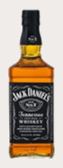
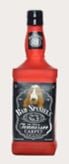
Defendant VIP sold a “Bad Spaniels” squeaky toy that mimicked the Jack Daniel’s trade dress, making bathroom puns out of the whiskey’s descriptors (“Old No. 2, on your Tennessee Carpet”). Id. at *3. In 2023, the Supreme Court held that heightened First Amendment protection does not apply where defendants are using others’ marks as a source identifier—in other words, “as a mark.” Id. at *2.
On remand, relying on the same record that originally took the case up to the Supreme Court but applying the new standard for the First Amendment defense, the district court concluded that Jack Daniel’s had not proven a likelihood of confusion sufficient to establish trademark infringement but nevertheless entered a permanent injunction against VIP because Jack Daniel’s had established dilution by tarnishment. Id. at *26.
On infringement, the court found the dog toy to be a successful parody: the toy clearly “conjured up” Jack Daniel’s but also created sharp, irreverent contrasts by replacing alcohol with dog feces, which the court judiciously noted could “convey a message of humor to some.” Id. at *20–21. The parody’s success ultimately reduced the likelihood of confusion enough for VIP to prevail. Id. at *25.
On dilution, those same contrasts cut the other way—associating the whiskey with feces was likely to harm the famous mark’s reputation, satisfying tarnishment without any Rogers shield or fair‑use carveout. Id. at *19, *26.
While this case provides an initial window into how courts will apply the Supreme Court’s Jack Daniel’s test in practice, there remain unsettled questions of how the First Amendment intersects with trademark law. VIP tried to raise a facial attack on the Lanham Act’s dilution by tarnishment cause of action, but the court found VIP did not timely raise that argument, though the case has been appealed to the Ninth Circuit, which may see things differently. Whether this case or another, the Supreme Court has shown a willingness to hear several First Amendment challenges to Lanham Act provisions in recent years, and there is a good likelihood that this latest constitutional question will reach the Court in the coming years.
Solidarity with a Side of Tote Bags: Trader Joe’s Co. v. Trader Joe’s United
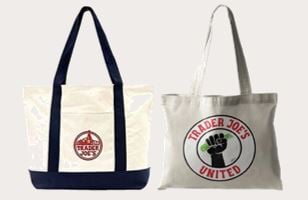
Trader Joe’s took aim at its employees’ union after the union launched a merch shop selling apparel, mugs, buttons, and tote bags emblazoned with TRADER JOE’S branding—using the same red palette, capitalized lettering, and font as Trader Joe’s itself—alongside a raised fist.
Trader Joe’s Co. v. Trader Joe’s United, 150 F.4th 1040, 1046 (9th Cir. 2025). The company sued for trademark infringement, unfair competition, false designation, and dilution for use in connection with the union’s commercial merchandise, while expressly disavowing any effort to stop nominative references to the company for organizing or advocacy.
Id. at 1047. The district court dismissed, finding no plausible confusion and holding the Norris
‑LaGuardia Act (“NLA”) stripped jurisdiction over injunctive relief given the ongoing labor dispute.
Id. at 1048.
The Ninth Circuit reversed and remanded. The court distinguished between protected labor advocacy and commercial merchandising, holding that while unions can use an employer’s name to identify themselves and communicate their cause, that free-speech halo does not necessarily immunize the sale of consumer goods bearing confusingly similar branding. Id. at 1050–52.
On fair use, the panel faulted the district court for invoking nominative fair use, when the union did not raise that defense, and then failing to apply the required three‑factor test. Id. at 1054–55. Likewise, the Ninth Circuit held that the district court’s holding regarding the NLA’s anti‑injunction regime was premature: whether the requested relief “grew out of” a labor dispute demanded a factual record. Id. at 1055–56.
Much as in Jack Daniel’s, this case highlights how courts are carefully separating speech from commercial uses of trademarks when handling First Amendment and related challenges. Defendants using third-party marks to sell products continue to face high hurdles in infringement litigation.
They May Not Be Fungible, but They Are Goods: Yuga Labs v. Ripps
In an attempt “not to embarrass the future,” the Ninth Circuit held as a matter of first impression that non-fungible tokens (“NFTs”) are “goods” under the Lanham Act and entitled to the protection of trademark law. Yuga Labs, Inc. v. Ripps, 144 F.4th 1137, 1149–51 (9th Cir. 2025).
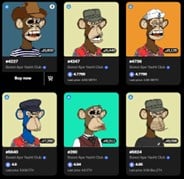

Left, BAYC's NFT Collection; Right, the "RR/BAYC" NFTs
Yuga Labs built the Bored Ape Yacht Club (“BAYC”) collection of NFTs that were each associated with a unique cartoon of a “Bored Ape.” Protest artist Ryder Ripps and collaborator Jeremy Cahen then launched “RR/BAYC” NFTs that linked to the exact same ape images and Ape IDs as their BAYC counterparts. Id. at 1152–53. Ripps framed the project as a satirical protest of the allegedly racist imagery of the BAYC cartoons and commentary on the hype surrounding NFTs, and the RR/BAYC NFTs sold out, generating over $1.36 million. Id. at 1152, 1154.
Unsurprisingly, BAYC sued for trademark infringement and won in the district court. On appeal, the Ninth Circuit considered defendants’ arguments related to the First Amendment and nominative fair use but held they failed under the Jack Daniel’s holding that these doctrines do not apply when the plaintiff’s marks were used as source identifiers by the defendant. Id. at 1164, 1166 (citing Jack Daniel’s, 599 U.S. at 148). Regardless of their parody or satirical positioning, defendants used the BAYC marks as marks to create a parallel NFT collection. Id. at 1165–67.
Nevertheless, defendants did win a partial victory as the Ninth Circuit overturned the district court’s grant of summary judgment for BAYC, holding that the likelihood of confusion factors were too mixed for plaintiff to prevail as a matter of law. The same caution carried into the analysis of Yuga’s cybersquatting claim, where “rrbayc.com” and “apemarket.com” were not established to be confusingly similar as a matter of law. Id. at 1175.
It Ain’t Over ’Til It’s Over: Fights Continue over Infringement Remedies
The Supreme Court’s decision in Dewberry was the flagship opinion on trademark remedies this year, with the Court reaffirming that disgorgement under the Lanham Act must be tethered to the named defendant’s profits—not those of non‑party affiliates. Dewberry Grp., Inc. v. Dewberry Eng’rs Inc., 604 U.S. 321, 326, 330 (2025). While the Court closed off one avenue for plaintiffs seeking to secure remedies from entire corporate families, it did not clarify when disgorgement is an appropriate remedy, leaving litigants to continue battling out an issue that can drive—or stymie—settlement in a great number of cases.
Looking ahead to 2026, we expect to see further aggressive litigation on damages and other remedies, including attempting to pierce the corporate veil and, as Justice Sotomayor suggested in her concurrence in Dewberry, determining when to consider corporate realities when calculating appropriate equitable remedies. Id. at 332 (Sotomayor, J., concurring).
A “Berry” Contentious Fight for Profits: Dewberry Group v. Dewberry Engineers
The long-running name game between Dewberry Engineers and Dewberry Group over the name “Dewberry” reached the Supreme Court in a dispute over remedies. Dewberry, 604 U.S. at 324–25. Despite a 2007 settlement limiting the Group’s use of the mark, the Group rebranded years later and rolled the “Dewberry” name back into marketing for properties owned by separately incorporated affiliates. Id. at 324.
The district court held this was willful infringement and, to prevent unjust enrichment, treated the Group and its affiliates as a single enterprise for the purpose of calculating disgorgeable profits, tallying nearly $43 million based on the affiliates’ real estate gains during the infringement period. Id. at 325. The Fourth Circuit affirmed, leaning on “economic reality” over corporate formalities to avoid establishing a blueprint for evasion. Id. at 325–26.
The Supreme Court unanimously disagreed, holding that the Lanham Act’s profits remedy means what it says: a prevailing plaintiff may recover the defendant’s profits, not the profits of nonparty affiliates. Dewberry, 604 U.S. at 326, 330. The Court went on to explain that corporate separateness is the baseline; absent veil-piercing, a court cannot re-label an affiliate’s earnings as the defendant’s own. Id. at 327.
Despite the unanimous holding, Dewberry is far from the last word on disgorgement. Justice Sotomayor’s concurrence highlighted that the Court’s reasoning was narrow, and catalogued the myriad other ways courts may seek to adhere to economic realities. Id. at 331 (Sotomayor, J., concurring). For more on Dewberry and its implications, see our Debevoise In Depth article.
At the Water’s Edge: Extraterritorial Application of the Lanham Act
Two key cases in 2025 began to illuminate the contours of the Supreme Court’s 2023 Abitron decision regarding extraterritorial application of the Lanham Act. In Doctor’s Best v. Nature’s Way Products, the Ninth Circuit explained that in assessing potential trademark infringement, courts may only evaluate domestic “use in commerce” under Abitron. In Wudi Industrial (Shanghai) v. Wong, the Fourth Circuit made clear that Abitron’s statutory foundation applies to Lanham Act claims but does not extend to enforcement of a private contract.
Lack of Domestic Use Raises Hurdles in Doctor’s Best Inc. v. Nature’s Way Products LLC
This Ninth Circuit appeal addressed when products manufactured in the United States but exclusively sold and marketed abroad may infringe on trademarks for products marketed and sold in the United States. Doctor’s Best, Inc. v. Nature’s Way Products, LLC, 143 F.4th 1101, 1104–05 (9th Cir. 2025). Doctor’s Best (DB) sought a trademark for its new “Nature’s Day” nutritional supplements, which it manufactured in the United States but did not sell to domestic customers, and sued for declaratory judgment of noninfringement against Nature’s Way Products’ (NWP) long-standing “Nature’s Way” trademark. NWP counterclaimed for infringement. Id. The district court granted summary judgment for DB, and the Ninth Circuit affirmed on appeal.
The Ninth Circuit explained that the district court correctly applied Abitron by isolating the domestic “use in commerce” in assessing whether DB infringed on NWP’s trademark. Id. at 1107. The court concluded that DB was using its mark in commerce by transporting its “Nature’s Day” products within the United States, and that use was what needed to be evaluated for likelihood of confusion purposes. The court rejected NWP’s argument that upon a finding of any domestic use in commerce, the court should consider whether there is a likelihood of confusion anywhere—not just within the United States. Id. at 1107–08. Instead, the Ninth Circuit focused its analysis on DB’s actual activities, concluding that “a reasonable jury could not conclude that consumer confusion is likely,” pointing especially to the parties’ distinct “marketing channels,” which indicated that there was “no material overlap” in those for Nature’s Way versus Nature’s Day products. Id. at 1111.
Be Careful What You Contract For: Wudi Industrial (Shanghai) Co. Ltd. v. Wong
The Fourth Circuit held that Abitron did not limit the availability of a permanent injunction to enforce a settlement agreement with European carve-outs for trademark usage. Wudi Indus. (Shanghai) Co., Ltd. v. Wong, 143 F.4th 250 (4th Cir. 2025).
After a trademark dispute was settled by way of a global settlement agreement in 2021 and Wudi allegedly violated restrictions in that agreement, Wong sought enforcement of the agreement in a U.S. district court. Id. at 255. The court held that Wudi had breached and entered an injunction. Id. at 256. On appeal, Wudi argued that the court impermissibly entered an extraterritorial injunction under Abitron because “the Lanham Act claim initially gave rise to federal court jurisdiction in this case, and because both cases involve ‘global’ injunctions imposed by a district court.” Id. at 258. The Fourth Circuit disagreed, explaining that while the presumption against extraterritoriality would have been applicable to claims under the Lanham Act, it did not apply to “the enforcement of a private settlement agreement,” “where a statutory claim is not at issue.” Id. at 259.
Together, these cases show how courts are working through the scope and limitations of the holding in Abitron. The precise nature of the defendant’s conduct, and of the plaintiff’s claims, will require careful attention in evaluating whether Abitron really serves as a bar to relief.
Looking Ahead to 2026
The year ahead promises more exciting developments in trademark litigation. As AI continues to develop (and, in some cases, hallucinate), more disputes are sure to arise over the use of trademarks in connection with AI-generated outputs—and we may begin to see claims against companies using AI to generate marketing material or new products, if they are not careful to screen for third-party trademarks or likenesses, especially when required by legislation like New York’s recent law governing the use of AI-generated likenesses in advertising. Fair use and First Amendment defenses will continue to arise in parody and commentary contexts. And trial courts will continue to parse the Dewberry decision as they determine the availability of equitable remedies under the Lanham Act. We will be watching closely as these issues continue to play out in courts around the country.
This publication is for general information purposes only. It is not intended to provide, nor is it to be used as, a substitute for legal advice. In some jurisdictions it may be considered attorney advertising.